


From a Council Estate to Cambridge University
I grew up on a council estate in Middlesbrough in the North-East of England. It is one of those places the statistics have already written off. The estate was called the H-Block, named after a TV series about prison. The town is regularly described as the worst place to live in the UK in the media.
The statisics told a story of high unemployment, low life expectancy, low educational attainment, rising crime and violence. Behind those numbers were people I loved. Brilliant, warm, extraordinary in their capacity to hold each other through impossible things. What I couldn't make sense of was why the story the statistics told never matched the people I actually knew.
That question has never left me. It became a career.
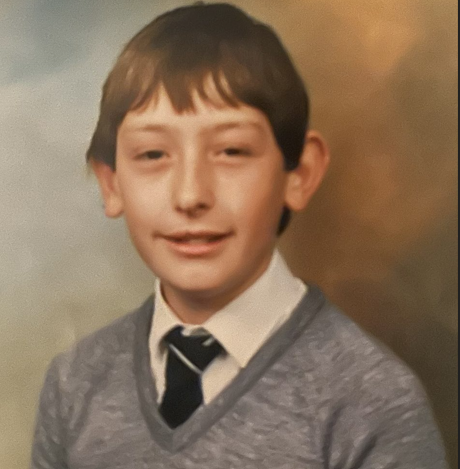
1988
A life changing turning point:
Standing at my bedroom window one summer morning, I was thirteen and bored and began to daydream. My imagination took over and I began to see images of books that I would write one day. That moment set me on a different path. I went back to school, still in the bottom set for all of my subjects, and I started working hard and asking questions.
Thirty seven years later that daydream begins to come true with the first published book by New Central Media. By this time I had been first in my family to go to university. I graduated with a First Class Honours degree. I went on to work at Cambridge University as a senior researcher. I have spoken at the UN several for several years. I am still asking the same question I asked at that window.
I'm a criminologist who learned the most important things not from journals but from the people in them — and my work exists to make what they know visible.
THE QUESTION THAT BECAME A CAREER
Why do the places and people the system writes off so often hold exactly what the system is looking to produce?
For more than two decades I've worked inside and alongside recovery communities, prisons, youth justice systems, universities and community halls. And there is a repeated pattern. The people and the communities the system labels as deprived, marginalised, hard to reach, complex, ‘high risk’, they are already generating something the system cannot produce.
Something that cannot be bought, commissioned or delivered. Something that grows when given and spreads beyond those directly impacted.
KEY FINDINGS FORM THE RESEARCH
People don't change because life hurts enough. They change when new identities, connection and belonging, purpose and a vision of what is possible start pulling them forward.
Recovery is not a clinical ‘cure’ applied to a broken person. It is a culture that generates quality of life, well-being and a flourishing that is set loose in the person’s life and everything around them. And the people and communities generating it most powerfully are the ones the system has spent decades walking past.
The ones we came to help are the ones doing the leading, is at the heart of everything I do. It appears in the data from recovery communities in the UK and the United States. In the voices of minoritised ethnic communities in England who built their own recovery cultures in the absence of services that could see them. In the diary entries of men in prison imagining lives they were told were beyond them.
The work
I've spent my career spanning three worlds that rarely talk to each other: academia, policy, and the communities most affected by both. My job is to build the bridges. To translate what the evidence shows into language that changes what gets built, what gets funded, and who gets to be seen as an expert.
That work has launched books at the United Nations and the British Library. Evidence from one of those books was accepted by Parliament in its review of drugs in prisons. Fifty-one people with lived experience are published authors because of it. Together, we are changing the needle on who counts as an expert and who has the authority to produce knowledge.
I am an Associate Professor in Criminology at the University of Derby, and the founder of New Central Media, a publishing imprint whose purpose is to create a new centre, one where we return the profits of knowledge back to the people who generated it. I speak internationally on recovery, justice and the conditions that generate lasting change.
Throughout all of my work, the line that sits underneath all of it, belongs to Bruce Alexander, one of the world's most respected addiction researchers. He wrote that society needs a galvanising alternative philosophy, created by talented people he could only hope would appear. And then he said he hoped we would be able to recognise them when they did.
They already have.
My work is the attempt to recognise them.
Led by those we came to help.
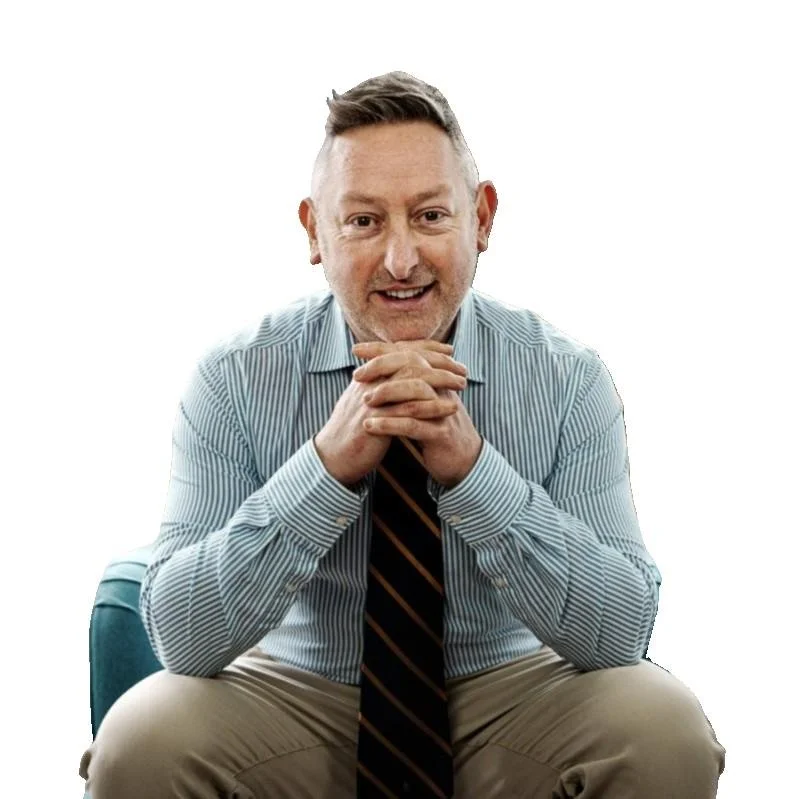
The Journey
1988 The turning point
Living in Middlesbrough on the H-Block estate. Age 13. The moment a different future became imaginable.
1994 First in the family to go to university
From the bottom set for all of my subjects to graduating with a First Class Honours degree.
1998 Starting my Doctoral Studies
I begin my unimaginable journey to becoming Dr David Patton at Sheffield University’s Law School.
1999 Senior Researcher, Cambridge University
Exploring the drugs and crime connection amongst arrestees across England and Wales. The research led to the Drugs Act 2005.
2000s Developing a pedagogy of liberation
From working in prisons, as a Life Coach for the Youth Justice Board, with wider participation students and with community members, the pattern begins to appear in every project and community. The communities written off are already holding the answers. I develop a pedagogy that centres lived experience that is featured in a QAA toolkit and is published as an examplar of liberatory pedagogy.
2023 Speaking at the United Nations
I spoke at the 67th Commission for Narcotic Drugs at the UN in Vienna. It was after speaking on stigma that the idea for New Central Media was conceived. I didn’t know then that I would be invited each year to speak at the UN.
2025 The first three books published by NCM
37 years later, the daydream becomes a reality. 3 books and 41 paid and published authors in year 1.
2026 Launching the Lived Experience Journal
The story continues….
Get in touch